Directory of the PicassoMuseum, Pepe Serra, presenting Michael Schwartz with their book “Imagenes Secretas Picasso y la estampa erotica japonesa,”which illustrates the ukiyo-einfluence on Picasso.
Michael Schwartz and Pepe Serra, the Director of the PicassoMuseum in Barcelona, provided a titillating interview for collectors. Serra showed seldom seen early works of Picasso created during the early ages of 10-12 highlighting his academic background. The collectors were additionally shown later works by Picasso including a version of Las Meninas, a 17th century Velazquez painting, deconstructed by Picasso.
Picasso, Las Meninas, 1957Velazquez, Las Meninas, 1656
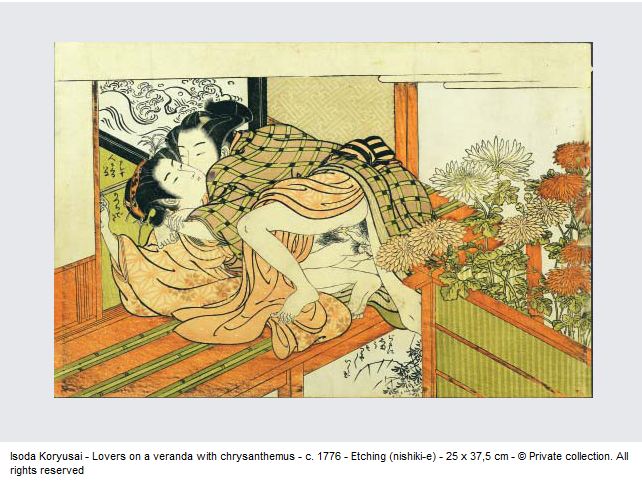
One of the highlights of the day was the newest exhibition revealing the erotic ukiyo-e Japanese woodblock prints which influenced Picasso’s later works.
“Picasso never parted with any of his Japanese prints. It would not be surprising, then, if they had proved to be a source of inspiration at one time or another. Whilst he always shunned any show of exoticism, in the last years of his life Picasso devoted himself, with total freedom, to representing scenes of sexuality, as though in exorcism of approaching death. The drawings and prints of those final years are every bit as bold as the shunga prints with which they establish a compositional and stylistic dialogue.” - Museu Picasso of Barcelona.
The PicassoMuseum is currently preparing a major exhibition of linocuts and has asked Mr. Schwartz’s assistance due to his vast expertise in this area.
Later in the tour, Michael and Serra lectured on many topics including those as the Vollard suite and La Celestines; many of these prints which you can find at Galerie Michael today such as the ones shown below.
Picasso, La Celestine, 1968 Picasso, Portrait of Vollard, II, 1937
Michael Schwartz and the great grandson of the renowned Pierre-Auguste Renoir, Alex Renoir recently returned from a triumphant trip of the Mediterranean where they hosted a Mediterranean Art Connoisseur Tour on the Ruby Princess Cruise line. Amongst many stimulating topics, collectors were lectured on the fascinating life and career of the renowned Pierre Auguste Renoir by our very own Michael Schwartz and Artist, Alex Renoir.
Galerie Michael is privileged to represent the talented Artist, Alex Renoir, who showcased his work during this tour and sold an incredible 24 of 25 works.
Below you can experience the stop they made at the Renoir House now known as Musee Renoir (Les Collettes) near Cagnes-sur-Mer, France. This house, built in 1907, is located on acres of beautiful landscape and housed P.A. Renoir from 1908 until his death in 1919. The home’s stunning surroundings inspired many of his paintings and holds 20 portrait busts and portrait medallions which is said to represent the largest collection of Renoir sculptures in the world.
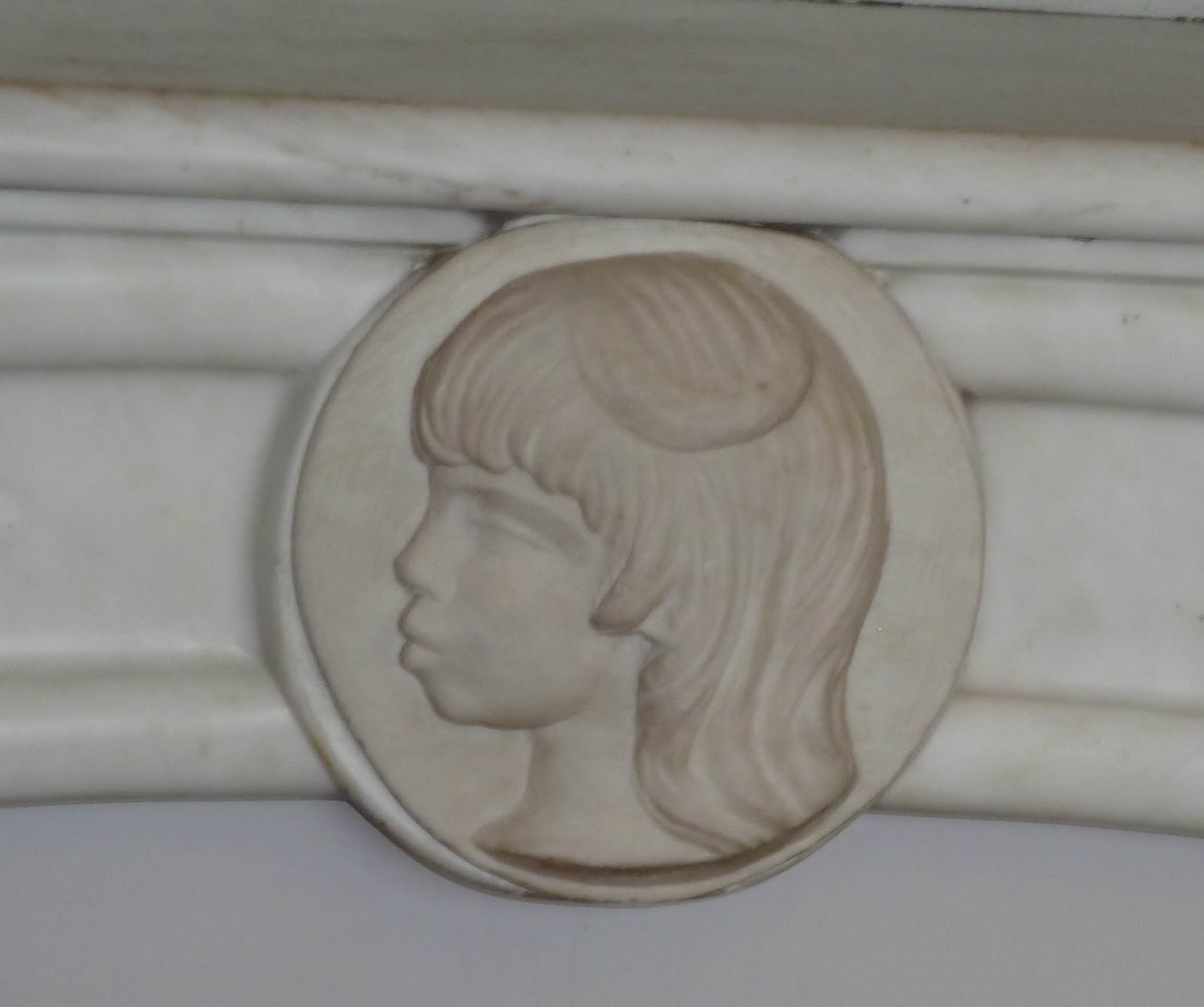
Various sculptures and medallions from the famous home of P.A. Renoir
Alex Renoir gives collectors a lecture on his titillating family history amongst the beautiful landscape once occupied by his Great Grandfather.
Alex Renoir provides the curatorial staff with information of his family tree.
Alex Renoir stands next to a decorative copy of Bust of Coco, which is one of the only original sculptures he personally created.
In relation to our upcoming exhibition of Spanish Masters including the renown Salvador Dali who is known for his close connection to his subconscious mind, this article speaks of the workings of a creative mind such as his and many others.
Madoura Potter Workshop is located in Vallauris, France. In the mid 1900’s it was owned and operated by Suzanne and George Ramie
In 1946 Picasso visited a Pottery exhibition “Romaunt de la Rose, in Vallauris, France during this visit Picasso was introduced to the Madoura Pottery Workshop where many famous potters have created works over hundreds of years. At this time Picasso became fascinated with the workshop and the creative act of pottery. He went to the studio and created 3 ceramic works. However Picasso left the workshop before seeing the completed works after the last firing of the kiln. In fact these 3 works still remain at Madoura. Many years’ later theses works (a little head of a faun and two bulls modeled by hand) were cast in bronze.
A year passed before Picasso went back to Vallauris to see the pottery exhibition where he once again fell in love with the artistic form of ceramic and pottery making. Upon visiting the Madoura Pottery Workshop he was surprised to see that his 3 ceramics were in pristine condition. During his return to the studio he was no longer looked upon as an amateur but a master, as he has studied the craft, tools and its artists. With him he brought a cardboard box of designs, an ingenious vigor for the artistic form. This spurred such creative ingeniousness in Picasso he began to create the very beginning of his ceramic collection that we know today. Also endearing him to Maroura Pottery Workshop was an employee Jacqueline Roque who later married Picasso. In fact Picasso was so in love with Jacqueline that she was able to get Picasso to denounce his children as legitimate heirs, thus securing her the Picasso fortune upon his death.
Currently on display and available at Galerie Michael are the following:
PICASSO, Pablo, 1881-1973 Face no. 202, 1963
Ceramic plate
9 7/8 in. ( 25.1 cm )
Currently it is unknown what the significance is between Picasso and fish but it is safe to assume that Picasso drew widely on his surroundings. In the1950’s Picasso spent a significant amount of time in the French Rivera in fact he met is last wife, Jacqueline Roque at Madoura Pottery in Vallauris. In fact it is widely due to Jacqueline and Suzanne and George Ramie, owners of the Madoura Pottery Workshop that we have Picasso Ceramics.Picasso, having been in some of the most beautiful cities on the French Rivera during the time Hand’s with Fish was created it would be only natural for Picasso to depict sea life in his work.
The symbolism with Hand’s with Fish could easily be the encompassing embrace of two worlds coming together in harmony. Another take on this ceramic’s image could be an ironic twist of fate that man can live in harmony with fish but eventually the fish (nature) is conquered in the end by man: man catches fish, cooks fish, presents fish on a plate and eventually eats fish. Some may even say that Picasso’s sense of humor and life view could be brought out in this one work.
This grinning, ceramic faun has been the subject of several of Picasso's work during this period as he drew much inspiration from this classic mythological character. Fauns were most known for their love of dancing, entertainment, and overall fun; Picasso seems to have tapped into this aspect, creating an expressive and lively rendition of a faun's face in this large, oval plate. The colorful quality and simplistic line enables the ceramic to come joyously alive with its whimsical and childlike character making this work easy to appreciate. The colors or glazing in this specific ceramic is extremely rare and unique as Picasso generally created earthenware which was unglazed and hand-painted with neutral colors of white, brown, black and blue tones.
Picasso’s use of the faun in this particular work is seemingly appropriate for Picasso’s character and personal demons that he was battling during the creation of this work 1984. As we all know during the later part of Picasso’s life he became more and more aware of his diminishing masculinity creating a focus strictly on phallic objects and subject matter, making the Faun a perfect subject for Picasso.